
2. Early Church Practice: Participatory Meetings
Perfilado de sección
-
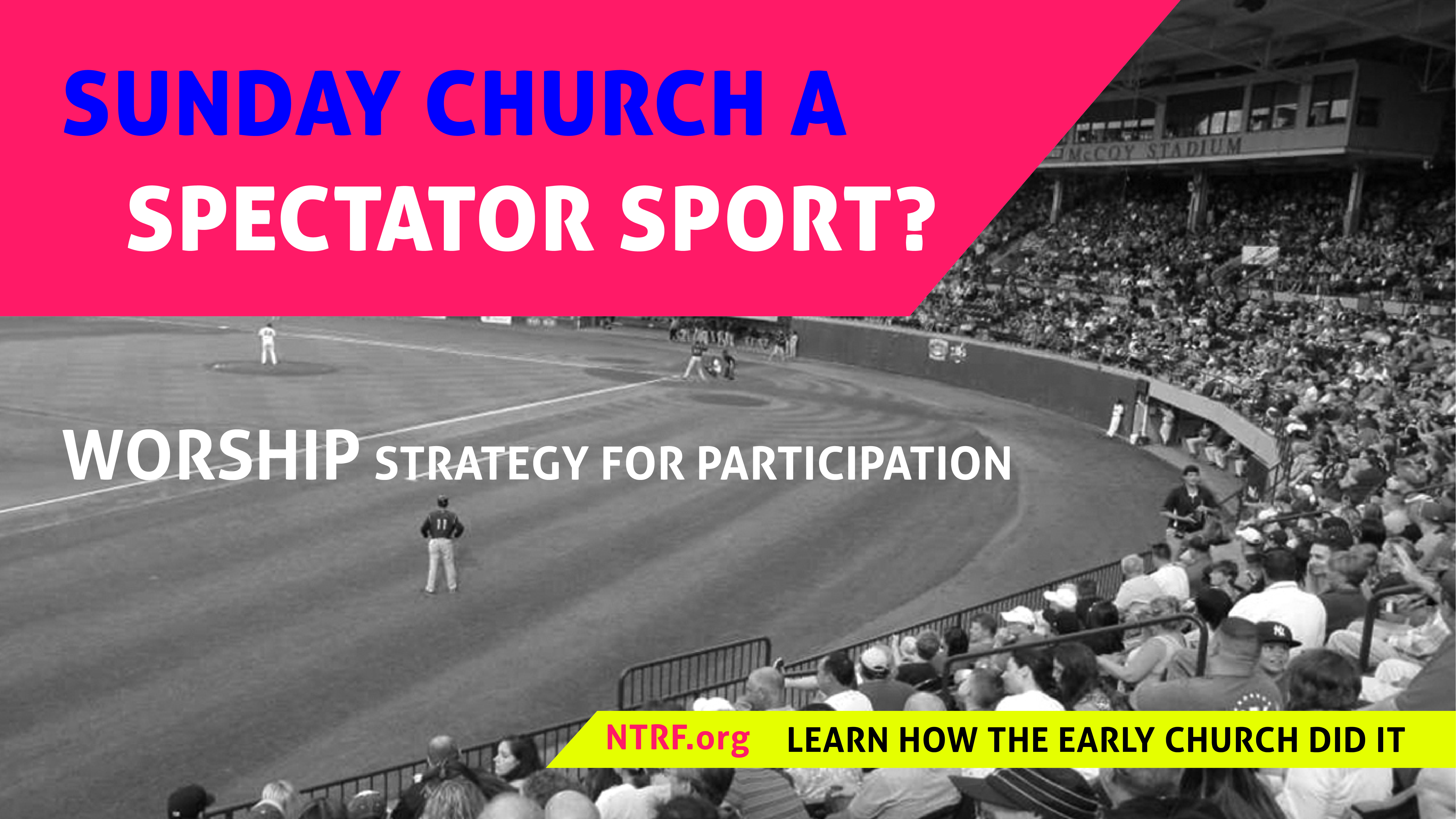
Participatory Worship
by Stephen Atkerson
Did Jesus intend church services to be a spectator sport? Have you ever wondered why believers in modern-day church services are so passive? Why they aren't allow to meaningfully participate in the service? Why church is like going to a show and passively watching? Why does the laity rarely get to spontaneously exercise their God-given speaking gifts in a meeting in order to edify their brothers and sisters?
Course Outcomes:
When you have completed this course, you will be able to:
Understand what a first-century scriptural church meeting looked like
Understand why a first-century scriptural church meeting did not consist merely of a sermon soliloquy
Understand how first-century Christians mutually edified each other at church
Know the purpose of coming together for church
Know the things that are not edifying for church meetings
Know what you can contribute to your regular church meetings
Understand that the order of a first-century scriptural church meeting was not scripted in advance
Forums:
Post in 3 Forums. You will get a completion check indicating you have posted reflections. Read and engage with the comments of others.
Quiz:
After you complete viewing the materials and posting your reflections, there is a feedback quiz. The quiz will help evaluate the effectiveness of the mini-course.
Content Provider:
This course is provided by New Testament Renewal Fellowship (NTRF.org)"For over twenty-five years, we have provided church leaders in the Americas, Asia, Europe, Africa and Oceania with resources and training in how the early church met together in community. The essential tenets of the faith to which we subscribe are identical to those found in the doctrinal statements of any sound evangelical institution. Our favorite statement of faith is the First London Baptist Confession of 1646. In short, we advocate historic, orthodox Christianity poured into the wineskin of New Testament church practice as seen on the pages of Scripture. Our goal is to be Christ honoring and thoroughly biblical in every area concerning our church life."
Course Video
Course Audio -
-
Los estudiantes debenVerPlease watch the first video clip from the beginning 00:00 until the timestamp 3:51.
Please watch the second video clip from 3:52 to 9:48.
-
Los estudiantes debenVer
Please watch this first video clip from 0:00 - 3:51 to be able to answer the first set posting assignment questions.
-
Los estudiantes debenHacer publicaciones en el foro: 1
Reflection Questions:
Video, Part 1 (00:00 - 3:51)
1. How is a modern-day "worship service" different from a first-century church meeting?
2a. In what ways have you been able to participate in a church worship service?
2b. What effect have these opportunities generated in your faith walk?
3. What benefits (and drawbacks) do you see in "attending" a worship service in which essentially only one person is allowed to speak?
4. What spiritual gifts do you have that could contribute to a participatory church meeting if given the opportunity?
Video, Part 2 (3:52 – 9:48)1a. When your church comes together each week, is it characterized by “each one” (1Co 14:26) having the freedom to say something to build up of the church? If not, why not?
1b. Would you prefer the "each one" approach or “only one” (spectator) approach? Why?
2. The prime directive for anything said in a church meeting is that it must be edifying (1Co 14:26). What does it mean to edify?
3a. When your church comes together, is the focus on the leaders as star players or as slide-line coaches? Why do you think that is?
3b. What are we missing if the focus is mostly on the leaders rather than on one another?
4. How should it be handled if a brother or sister speaks something which is appropriate or fitting for the edification of the church?
5. What duty do church leaders have in participatory church meetings?
6. What are the benefits of incorporating a principle of participation into our church meetings?
7a. Have you participated in church meetings which were spontaneous, open and fluid, and the order of service not predestined in the church bulletin?
7b. What might we be missing if we don’t allow church members the freedom to speak in a worship service?
8. Why do you suppose that in most church meetings the laity are not unleashed to spontaneously use their spiritual gifts to strengthening and encourage the church?
9a. Have you ever contemplated that Paul said open and orderly spontaneous church meetings were a “command” (1 Cor 14:37), and not an option?
9b. What steps can church leaders take to at least begin to obey this command?
-
-
-
Los estudiantes debenVer
-
-
-
Forum Posting Assignment #2 Foro
Video 3:
1. According to Hebrews 10:24-25, what are you supposed to ponder before you ever leave home to participate in a church meeting?
2. How could church meetings be formatted to better facilitate the one-another process of encouragement (Hebrews 10:24-25)?
3. Why do some people feel all alone in large, traditional worship services?
4. What can you yourself do at your next church meeting to stir up someone else to love and good deeds?
5. What negative consequences might there be for disobeying Hebrews 10:24-25?
6. Open, participatory worship does not preclude the teaching of God’s Word by church leaders. What verses can you think of that support the importance of in-depth Bible teaching?
Video 4:1. When your church comes together for worship, how can the music be prevented from becoming a performance with a passive audience?
2. Paul states in Ephesians 5:19 and Colossians 3:16 that Christians should sing psalms and hymns and spiritual songs, not only to the Lord but also to “one another.” What benefits do you think might come from purposing to also sing to “one another”?
3. If the music in your church’s worship is so loud that the congregation can’t hear itself singing, what deleterious effects do you think might follow from that?
4. In what ways do you believe that the psalms, hymns, and spiritual songs sung in your church might edify the brethren in their minds as well as their emotions?
Video 5:1. In your assembly meetings, what qualifications are required of those who are assigned the duty of teaching?
2. Luke recorded that the early church was devoted to the apostles’ teaching (Acts 2:42). What does this suggest about the role of teaching in “each one has” church meetings?
3. How do the assigned teachers in your church prepare for their teaching to the assembly?
4. How can the teaching in your church be made relevant and edifying for the life of the brethren?
-
-
-
Los estudiantes debenVer
-
-
-
Forum Posting Assignment #3 Foro
Video 6:
1. When you read Acts 2:42, 1 Timothy 4:13, and Acts 14:26-27, what do you find were important parts of the early Christian worship service?
2. If the worship services at your church are dead, what could be done to enliven them? If the worship services at your church are chaotic and out of order, what should the leadership do to remedy them?
3. Please give some examples of your personal activity (or passivity) during your church’s worship services.
Video 7:1. Please state in which ways and how far the modern church has deviated from the examples given in the New Testament with respect to participatory worship.
2. In your view, how much authority does the apostle Paul have in dictating the arrangements of the modern worship service, and in what matters does the church have freedom to worship as it so pleases?
Video 8:1. Please describe the possible negative effects on the believer should his church’s worship services be characterized by apathy, atrophy, and entropy?
2. What possible benefits do you think multiple ministries exercised in the worship service may provide the individual believer or his church?
4. What benefits do you believe heartfelt testimonies provide the church meeting?
5. In what ways might participatory church meetings assist in the raising up of future Christian leaders?
6. In what ways will participatory church meetings be beneficial to your pastors?
Congratulations! You've earned a complimentary copy of our book, Rediscover Early Church Practice. Click here.
-
-
🎉 Well Done!
Congratulations on Completing This Course!
You've successfully completed this course. Celebrate your accomplishment with a personalized Certificate of Course Completion that recognizes the time, effort, and dedication you've invested in your learning journey.
Purchase Your Certificate
-