
Disaster Response & Community Crisis Chaplaincy Ordination Program
Section outline
-
Disaster Response & Community Crisis Chaplain Ordination Program Course
A structured pathway equipping Christ-centered leaders to serve individuals, families, responders, and communities during disasters and crisis situations with compassion, steadiness, dignity, and spiritual care.
Are you called to bring Christ-centered presence, prayer, and spiritual care into times of disaster, trauma, disruption, and community crisis?
The Disaster Response & Community Crisis Chaplain Ordination Program is a structured pathway that equips you with biblical, theological, and practical chaplaincy skills and provides a clear route to ordination and clergy credentialing through the Christian Leaders Alliance.Program PurposeA Disaster Response & Community Crisis Chaplain is a volunteer or part-time minister who brings Christ-centered presence, prayer, and spiritual care into settings marked by crisis, disruption, grief, trauma, and urgent need. Chaplains serve individuals, families, first responders, churches, shelters, care teams, and affected communities through compassionate listening, prayer, Scripture, emotional steadiness, crisis presence, and practical spiritual support.
Disaster response and community crisis chaplaincy is ministry in emotionally intense situations where calm presence, wise judgment, humility, and clear boundaries matter deeply. Chaplains may serve during natural disasters, accidents, fires, community violence, public emergencies, sudden deaths, evacuations, grief gatherings, and recovery efforts. They support people facing shock, loss, confusion, fear, displacement, and spiritual questions, while honoring the roles of emergency personnel, community leaders, pastors, and relief workers.
Chaplains do not come as “fixers,” but as faithful servants of Jesus who offer hope, calm, prayer, and spiritual steadiness in moments of disruption and pain. They enter hard places with compassion and clarity, helping people feel seen, heard, respected, and not abandoned in the middle of crisis.
You’ll Learn to
- Serve faithfully in disaster response settings, community emergencies, crisis scenes, shelters, and recovery efforts with humility and clear role boundaries
- Offer Spirit-led care during shock, grief, trauma, confusion, sudden loss, displacement, and emotionally intense situations
- Practice consent-based spiritual care through prayer, Scripture, presence, listening, brief ministry conversations, and crisis support
- Build trust through confidentiality, professionalism, consistency, teamwork, and Christlike compassion
- Support families, survivors, community members, and responders without role drift or interfering with emergency operations
- Partner well with pastors, churches, law enforcement, fire personnel, EMS, social workers, shelter leaders, and community organizations without becoming a substitute for their responsibilities
- Minister with calm emotional awareness while recognizing your limits and knowing when referral, reporting, or deferring is necessary
Required Courses
Core Training
Required Courses
- Multiplying Christian Leaders (1 Module)
- Chaplain Foundations (1 Unit)
- Disaster Response & Community Crisis Chaplaincy Practice (2 Modules)
- Wedding Officiant Skills (1 Module)
- Funeral Officiant Skills (2 Modules)
- Disaster Response & Community Crisis Chaplaincy Capstone (0 Credits) (This Course)
Completion Pathway
Advanced & Recommended
- Recommended: Christian Leaders Theology (1 Module) or Christian Basics (3 Units)
Outcomes
Graduates are equipped to serve as recognized disaster response and community crisis chaplains in churches, neighborhoods, shelters, local ministries, community response efforts, and crisis-affected settings—offering credible, compassionate spiritual care to individuals, families, responders, and communities while sustaining ministry through strong soul-care rhythms, clear boundaries, and role-aware practices.
Keywords: crisis care • disaster ministry • grief support • trauma-aware presence • community response • clear boundaries • policy-aware practiceSteps to Ordination
- Enroll with Christian Leaders Alliance.
- Complete required CLI training.
- Submit endorsement(s).
- Update profile (ministry role, training, background details as required).
- Order credentials.
- Participate in commissioning (laying on of hands recommended).
- Optional: publish your story and/or register a Soul Center.
Begin Your Journey Today
Whether you are volunteering, pursuing part-time ministry, or preparing for broader chaplaincy leadership, the Disaster Response & Community Crisis Chaplain Ordination Program provides the training, recognition, and confidence you need to serve well.
Begin your ordained chaplaincy journey today and answer the call to bring comfort, clarity, prayer, and Christ-centered hope to people and communities in times of crisis.
Ready to begin? Scroll up and click the “Enroll me” button to get started.
-
Step OneComplete the Required CoursesYour Program Completion Tracker
This is your program courses completion tracker. When each required course is checked off—including this program course—you have met the system requirements for ordination recognition in the Christian Leaders Alliance Directory . You may then purchase your credentials, if you choose, and proceed to your public prayer or ordination commissioning into this role.
Check off courses Meet requirements Purchase credentials Commissioning -
Step TwoConfirm or Complete the Endorsement ProcessLevel One Endorsement
A Level One Endorsement signifies that someone has recognized your character and temperament as suitable for ordination. If you have already achieved Endorsement Level One, you may move past this step. Many have received their Level One Endorsement through the wedding officiant ordination program. If that is true for you, you have completed this step.
Character recognized Temperament affirmed Move forward if complete Wedding program pathway -
Step Three
Update Your Student Profile
Your official clergy profile
As an Ordained Disaster Response & Community Crisis Chaplain, your student profile will be publicly displayed as your official clergy profile in the Christian Leaders Alliance Directory.
This profile serves as your recognized ministry credential, so it is important to present it with clarity, humility, and professionalism.- Write your ministry profile thoughtfully. Highlight how God has stirred your heart for Disaster Response & Community Crisis Chaplaincy, the training you are pursuing for this calling, and the areas of service that most interest you, such as crisis presence, grief and loss care, trauma-aware spiritual support, prayer, Scripture reading, family encouragement, responder support, community recovery ministry, and partnership with local churches and relief efforts.
- Upload a professional, high-quality photo that reflects your chaplain role.
- Keep your language clear, humble, and role-aware, showing that you understand dignity, consent, facility policies, boundaries, and confidentiality in senior care settings.
Why this mattersA well-crafted profile communicates your competency, credibility, and calling as an Ordained Disaster Response & Community Crisis Chaplain.
-
Step FiveFormal Program Completion QuizFinal confirmation for ordination completionBefore You Order Your Credentials
Before you order your credentials, you must complete this quiz to confirm in our system that you have finished this ordination program. After that, you may purchase your credentials (if you choose) and schedule your laying-on-of-hands commissioning service.
What Happens After Submission?Once all courses in this program are completed and this quiz is submitted, our system will record your completion: your credential will be awarded, and every program requirement box will be checked off.
Important NoteIf you complete this quiz but one or more required courses in the program are not yet finished, this course may show as completed in your program tracker, but other course boxes will remain unchecked until those requirements are fulfilled.
Submit final quiz Completion recorded Credential awarded Commissioning next -
Confirm CompletionBefore You OrderPlease Confirm Your Credential CompletionCredential kits are intended for students who have completed the Disaster Response & Community Crisis Chaplain credential. Please confirm your completion before ordering.Order Your CredentialsChoose Your Disaster Response & Community Crisis Chaplain KitChoose which official credential package fits your needChaplain Kit Essential
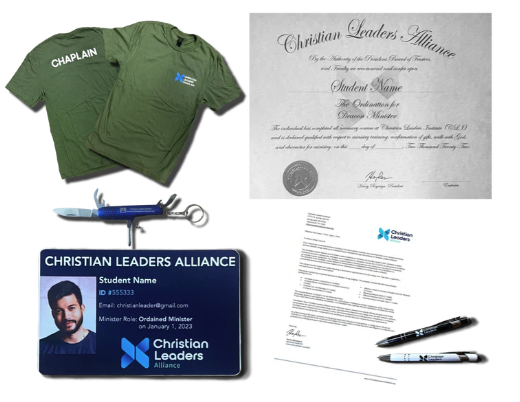 $150ID Card$50Letter of Good Standing$50Certificate$80Christian Leaders Pen$1.99Shirt$25Chaplain Multi-Tool$15Save $71.99Buy This KitChaplain Kit PlusMost Popular
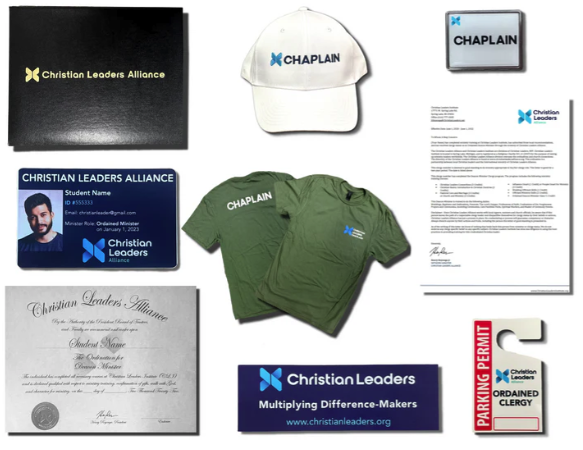 $250ID Card$50Letter of Good Standing$50Certificate$80Shirt$25Parking Pass$30Bumper Sticker$18.99Chaplain Cap$15Chaplain Pin$15Credential Cover$35Save $68.99Buy This KitChaplain Kit Premium
 $350ID Card$50Letter of Good Standing$50Certificate$80Bumper Sticker$18.99Chaplain Shirt$25Chaplain Polo$35Christian Leaders Fleece$45Clergy Ring$14.99Notebook$14.99Parking Pass$30Credential Cover$35Chaplain Cap$15Chaplain Pin$15Coffee$10.99Backpack$30Save $119.96Buy This Kit
 -
Step Eight
Disaster Response & Community Crisis Chaplains and Soul Centers
A local ministry hub for Christ-centered care, prayer, discipleship, and community connection
A Soul Center within the Christian Leaders Alliance (CLA) is a locally registered Christian religious society designed to serve a specific community or relational circle with Spirit-led presence, discipleship, and pastoral ministry. Soul Centers are led by credentialed ministers, including Ordained Disaster Response & Community Crisis Chaplains, who are trained and recognized through the Christian Leaders Alliance. Each leader affirms the CLA Statement of Faith and agrees to follow the best practices outlined in the Soul Center Handbook.
The core purpose of a Soul Center is to function as a local expression of the Church—a gathering and ministry hub where the love of Christ is demonstrated through biblical teaching, pastoral chaplaincy, prayer, discipleship, and supportive community connection.
For Disaster Response & Community Crisis Chaplains, Soul Centers often become a steady bridge between crisis-affected people and Christ-centered spiritual encouragement—supporting individuals, families, responders, and communities with compassion, steadiness, dignity, and clear boundaries.🕊️ The Role of the Disaster Response & Community Crisis Chaplain in a Soul Center
Disaster Response & Community Crisis Chaplains help anchor Soul Centers by:
- Providing spiritual care and pastoral presence for individuals, families, responders, and community members during seasons of disaster, grief, trauma, fear, disruption, loss, and recovery
- Offering prayer, Scripture encouragement, spiritual support, and compassionate listening in a consent-based, role-aware way that honors emergency structures, leadership roles, and wise ministry boundaries
- Supporting people facing sudden loss, displacement, emotional overload, uncertainty, and spiritual searching during crisis situations
- Encouraging healthy spiritual resilience, comfort, reconciliation, and hope—helping people take real steps toward peace, strength, and renewed life in Christ
- Extending Christ’s compassion through community-based support, including local church partnerships, follow-up care, prayer gatherings, memorial support, referral relationships, and connection to healthy Christian community
Whether standing with a grieving family, praying with a person in shock, encouraging responders after a hard incident, offering comfort at a community gathering, or helping a church respond with wisdom after a crisis, the Ordained Disaster Response & Community Crisis Chaplain extends the mission of the Soul Center into places where pain, confusion, and disruption are deeply felt—bringing God’s presence with steadiness, clarity, and wise boundaries.
🌍 Types of Soul Centers
Each Soul Center reflects the gifts, training, and calling of its leader. Common forms include:
- House churches or small group fellowships
- Community prayer and crisis-support gatherings
- Chaplaincy-based Soul Centers supporting neighborhoods, shelters, recovery efforts, and local church partnerships
- Ceremonial and pastoral care hubs led by officiants and chaplains, including memorials, prayer services, grief gatherings, and community care
- Recovery, grief, and encouragement ministries serving individuals and families affected by disaster, trauma, and crisis
- Specialized ministry expressions such as responder support ministries, community care teams, Bible study gatherings, prayer circles, disaster follow-up ministries, and local outreach efforts
All Soul Centers are affiliated with the Christian Leaders Alliance, which provides:
- A theological and accountability framework
- Access to ministry resources and best practices
- Connection to a global network of Christian leaders
Local ministry hub • Pastoral presence • Discipleship and prayer • Community connection👉 Ready to begin?